

Inclusive decision making does not happen by intent alone. In Indian organisations, HR teams sit at the centre of decisions that shape hiring, promotions, performance reviews, learning access, and leadership pipelines. Every choice they influence has a direct impact on who grows, who is heard, and who is left behind. Yet many HR professionals are expected to deliver inclusion outcomes without being equipped with the skills, frameworks, or confidence required to challenge bias embedded in everyday processes.
Upskilling HR teams for inclusive decision making is therefore not a DEI add on. It is a strategic necessity for organizations that want fairness, consistency, and credibility in how people decisions are made.
Why Inclusive Decision Making Remains a Gap in HR Practice
Most HR professionals in India are technically strong and deeply familiar with policies, compliance, and operational execution. However, inclusive decision making requires a different layer of capability. It demands awareness of unconscious bias, an understanding of social and structural inequities, and the ability to question long standing practices that may appear neutral but produce unequal outcomes.
Many exclusionary decisions are not intentional. They occur when HR teams rely heavily on past data, informal feedback, cultural fit narratives, or unchallenged leadership preferences. Without structured upskilling, HR professionals may unknowingly reinforce patterns that disadvantage women, persons with disabilities, LGBTQIA+ employees, first generation professionals, or talent from non metro backgrounds.
The Role of HR as Gatekeepers of Inclusion
HR teams act as gatekeepers at multiple points in the employee lifecycle. From deciding which resumes progress, to shaping performance criteria, to advising leaders on promotions and exits, HR recommendations carry significant weight. When HR teams are not trained to apply an inclusion lens, decisions tend to favour familiarity over fairness.
Upskilling enables HR professionals to move from policy enforcement to ethical influence. It equips them to ask better questions, challenge subjective judgements, and introduce data informed perspectives that reduce bias. This shift transforms HR from an administrative function into a trusted partner in building equitable workplaces.
What Inclusive Decision Making Skills Actually Involve
Inclusive decision making is not about being cautious or politically correct. It is about being rigorous, reflective, and consistent. HR teams need to develop skills in recognising bias triggers, interpreting data beyond surface metrics, and understanding how identity and power dynamics influence workplace experiences.
This includes the ability to assess whether job criteria unintentionally exclude capable talent, whether performance feedback is applied unevenly across groups, and whether leadership potential is being equated with visibility rather than capability. These skills are not intuitive. They must be learned, practised, and reinforced through structured tools and real scenarios.
Why One Time Training Is Not Enough
Many organisations approach inclusion upskilling as a one time workshop or awareness session. While these initiatives create momentary consciousness, they rarely translate into sustained behavioural change. Inclusive decision making requires continuous capability building that evolves with organisational context.
HR teams need ongoing access to frameworks, case based learning, decision checklists, and reflection tools that can be applied during real time decision making. Without this continuity, inclusive intent often fades under operational pressure, leadership urgency, or business targets.
Embedding Inclusion into HR Decision Frameworks
Upskilling becomes effective when inclusion is embedded into existing HR processes rather than treated as a parallel activity. This means redesigning decision frameworks to include bias checks, structured evaluation criteria, and accountability mechanisms.
For example, recruitment shortlisting can include diversity impact questions, performance reviews can be audited for language bias, and promotion panels can be guided through structured decision rubrics. When inclusion is built into how decisions are made, HR teams are empowered to uphold fairness even in high pressure situations.
The India Context and Why Local Nuance Matters
Inclusive decision making in India carries unique complexities shaped by language, class, caste cues, gender norms, and regional privilege. Upskilling HR teams must therefore be rooted in Indian realities rather than generic global models.
HR professionals need to understand how subtle indicators such as educational background, accent, caregiving responsibilities, or location can influence decision outcomes. Contextual learning helps HR teams identify bias patterns that are specific to Indian workplaces and respond with sensitivity and confidence.
How the DEI Toolkit Supports HR Upskilling
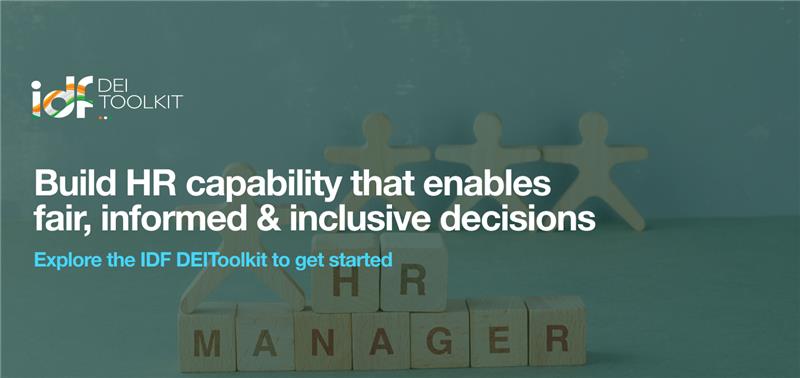
The DEI Toolkit by India Diversity Forum is designed to support HR teams in translating inclusion principles into practical action. It provides structured guidance, reflective questions, and decision making frameworks that help HR professionals examine their choices through an inclusion lens.
Rather than prescribing generic solutions, the Toolkit enables HR teams to assess readiness, identify gaps, and apply context relevant practices across hiring, talent development, and leadership processes. It acts as a continuous learning companion rather than a one time intervention.
Building Confidence to Challenge and Influence
One of the most critical outcomes of upskilling is confidence. HR teams often hesitate to challenge senior leaders or question long standing practices due to hierarchy or fear of resistance. Inclusive decision making training equips HR professionals with the language, data points, and frameworks needed to influence conversations constructively.
When HR teams are confident, they move from silent agreement to informed advocacy. This shift strengthens trust in HR and positions the function as a credible driver of organisational integrity.
Conclusion
Upskilling HR teams for inclusive decision making is a long term investment in fairness, consistency, and organisational credibility. It ensures that inclusion is not dependent on individual intent but supported by capability, structure, and accountability. In a diverse and complex workforce like India’s, organisations cannot afford to leave such decisions to chance.
The DEI Toolkit by India Diversity Forum supports HR teams in building the skills, confidence, and frameworks required to make inclusion a lived practice. Explore the Toolkit to strengthen your HR capability and ensure every decision moves your organisation closer to equity and belonging.
